
Shannon Horrigan, RP,RSSW,CCAC,ICADC,MATS,CPGC,ICPGC-II,ICGDC,ICCS,CCSAS
Gambling policy is determined and regulated by the provincial government who issues licences to gambling operators in each province. The federal government only determines what forms of gambling are allowed.
Most provinces have taken an approach that focuses solely on the individual by launching “responsible gambling” and “play smart” campaigns to educate the public on how the games work. The Responsible Gambling Commission (RGC) provides education around gambling, and awareness of gambling-related harms and ways to reduce player’s risk by informing the public around lower-risk gambling guidelines. Players are also informed that risk is inherent in gambling, and while this approach has some merit, it ignores the research that has found there are many gambling-related harms that have detrimental consequences to public health that are not related to the individual who is gambling.
Gambling is not a problem for most people who participate– in fact, more than 70% of people report having gambled in the past year. There is a small percentage of the population, however, approximately 1-2% of people, who develop problems that significantly impacts their physical and mental health. This includes those who do not meet the diagnostic criteria for gambling disorder. From a public health perspective, the gambling-related harms are not due to the characteristics of the individual but rather the environmental ones.
The Lower-Risk Gambling Guidelines are:
- Gamble no more than 1% of household income before tax per month
- Gamble no more than 4 days per month
- Avoid regularly gambling at more than 2 types of games
For the Lower-Risk Gambling Guidelines to be effective, people must follow all three guidelines.
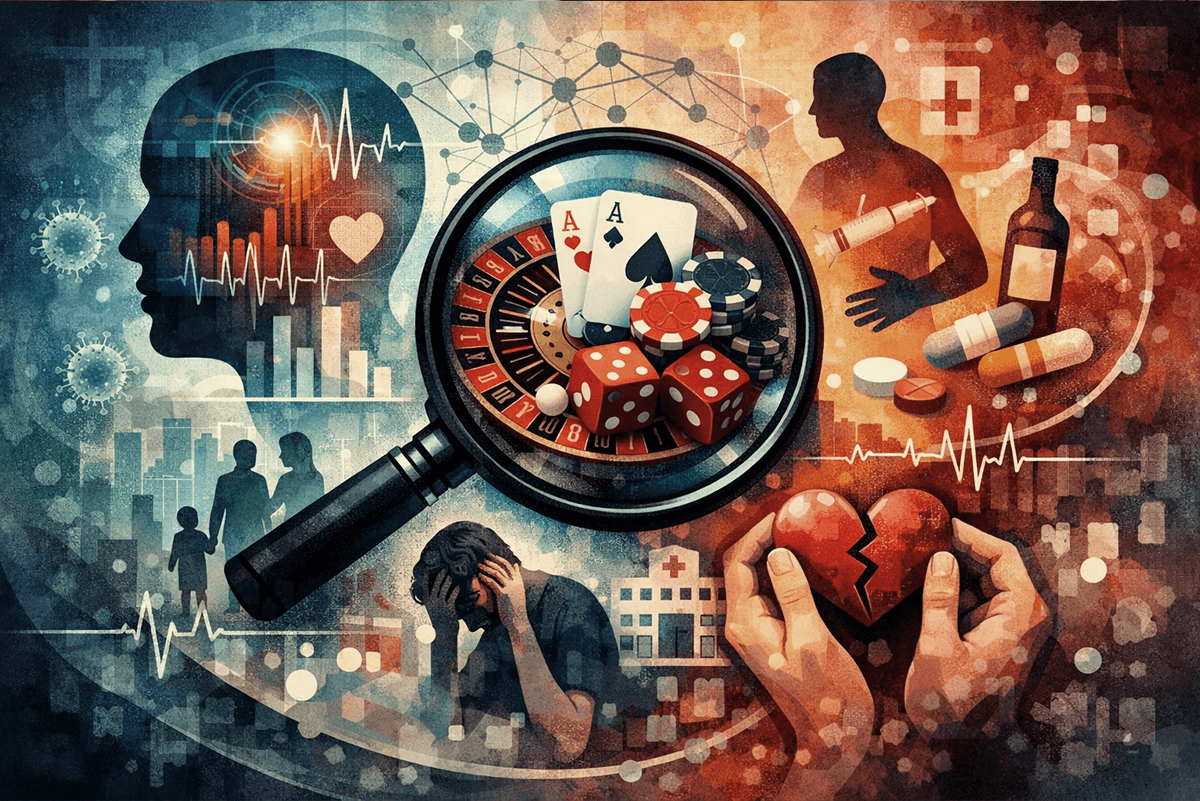
The gambling-related harms experienced are typically financial harm, relationship disruption, conflict or breakdown, emotional or psychological distress, decrements to health, cultural harm, reduced performance at work or school and criminal activity (REF: Langham et al, 2016).
Up to 70% of people with gambling disorders also have co-occurring physical and mental health problems, particularly depression and anxiety. They are also at an alarming rate of suicide ideation and mortality that is 15 times higher than the general population. Death by suicide is also the leading cause of death amongst this population.
These gambling-related harms not only impact the individual, but it is estimated that approximately five to 10 people connected to a person who gambles are also negatively impacted, typically financially and adverse mental health impacts.
The public health approach addresses the risks associated with increased exposure to gambling opportunities and more harmful forms of gambling. The features of the gambling product can significantly put the individual at risk of developing a problem and experiencing gambling-related harms. Features such as the speed of play, and the frequency of play tend to encourage players to bet more and play for longer periods of time. This makes it difficult for the player to stop gambling, and they typically experience larger monetary losses. The proliferation of internet gambling (igaming) has also increased access and opportunities to gamble which is directly related to problems at the population level.
Other factors that contribute to the increase in gambling-related harms are exposure to gambling advertising. The content and volume of advertising for gambling activity present a very positive image of gambling and as they are widespread, youth are also being exposed to this messaging, putting them at increased risk of developing a gambling problem. Gambling advertising has been insidiously incorporated into sporting broadcasts and apps, increasing exposure even more so. Current regulations have minimal impact on reducing gambling-related harms.
Sports betting is also dramatically negatively impacting those who gamble, especially young men. The features of in-play betting make it more “exciting” as the player feels immersed in the game and the rate and frequency of play increases player engagement and the amount of money wagered, typically increasing gambling-related harms. Sports betting is associated with a three times higher rate of developing a gambling disorder.
A public health approach to gambling would address that gambling occurs on a spectrum, as evidenced from being benign to gambling disorder. It focuses on the population as a whole and not just the individual. It addresses the risk factors associated with gambling rather than the gambling itself. Finally, this approach encourages regulation of the various forms of gambling and products that are scientifically known to create greater risk of development of a gambling problem.
It is recommended that provincial governments use some of the gambling revenue it collects to fund gambling research and to fund treatment programs that are easier to access and educate health care providers in screening and treatment of gambling issues.
Shannon Horrigan is a seasoned addiction counsellor, having worked in the public and private sector counselling and psychotherapy spaces for more than 27 years, and has been a member of CACCF since 2008.
Shannon holds Canadian and International credentials for drug, alcohol and behavioural addictions such as gambling, video gaming and sex addiction, and shares that addiction has touched her life both professionally and personally. In addition to her professional credentials, she has worked in withdrawal management programs, facilitated drop-in groups, provided intake assessments along with individual counselling, and has provided crisis support and through the mobile mental health support unit with the Durham Regional Police.
Shannon is a Registered Psychotherapist and Registered Social Services Worker in Ontario, and provides Clinical Supervision for Gambling Counsellors through the CACCF. She also belongs to the Addiction Professionals Treating Problem Gambling group operating within the US. She teaches at both St. Lawrence College and Trios Colleges in their addictions and mental health programs, and has her own private practice.
 We use cookies to offer you our services. By continuing to use this site you consent to our use of cookies as described in our